

Maati Sangathan
Livelihood Support
Recognising that women cannot step out of their homes and participate in the collective process unless there are efforts to provide livelihood support, Maati has been finding various means by which women can earn. This includes offering marketing support for woollen products like carpets, rugs, blankets, sweaters, etc. which the women have been weaving/knitting traditionally. In 2010, the Maati Workshop was started to take the production and sale to a slightly larger, yet manageable scale. Maati organises a fortnightly Mahila Haat where women can come and sell their produce from the fields, home made snacks and woollen products. This is also an opportunity for the sangathan to interact and connect with the wider community, especially the women.
Van Panchayat
In 2003, Malika was elected the Sarpanch of the Sarmoli-Jainti Van Pachayat (Village Forest Council). She along with the women of the sangathan initiated a process in which the community enthusiastically took up the responsibility of regulating use of their forest’s products (grass, wood and leaves), regenerating the Mesar Kund (a pond) and regular afforestation. An innovative way to link conservation to livelihoods was started in 2004 through the home stay and Guide/porter programmes (Tourism, Livelihoods and Conservation). A ground breaking achievement of her tenure was extending membership of the van panchayat to women, including single women and resident daughters, thereby recognising them as right holders. Another was the formation of a sangathan of 40 van panchayats to discuss and take up shared concerns.
Environmentally Sustainable Development
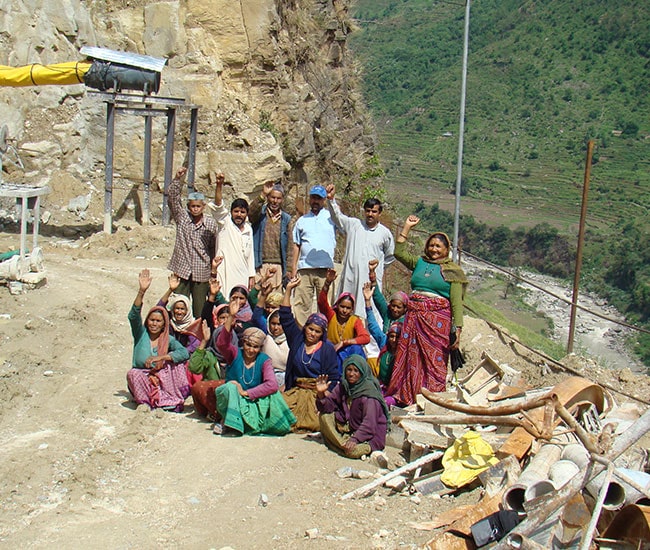
Maati has vociferously supported environmentally sustainable development and has been encouraging the use of solar lanterns and organic seeds. They have also raised their voice against the large hydroelectric projects in the region that are riding roughshod over environmental and livelihood concerns. NTPC undertook a 261 MW hydro electric project by the name of Rupsiabagar-Khasiyabara on the Goriganga river that required 218 hectares of forest land and 60 hectares of private land. The sangathan in conjunction with many other groups raised serious procedural questions on land acquisition, compensation, rehabilitation and the ecological impact of the project. In July 2010, MoEF denied permission for the project to be implemented. (Opposing Destruction in the name of Development)
The dedicated membership of Maati comes from the villages of Sarmoli, Shankadura and Naya Basti. There are about 7-8 members who meet everyday, have discussions, and keep a regular record of their activities and accounts. Each person is given a well defined area for which she is responsible. The strength of the sangathan lies in the diversity of the skills that the different members bring to it. The sangathan has small groups of 10-12 women working in different fields like seed conservation, forests, woollen products, cattle etc. Maati often works under the banner of larger groups like the Uttarakhand Mahila Manch, Van Panchayat Sangathan etc. and networks closely with the Nadi Bachao Abhiyan and the Kisan Mahasabha.
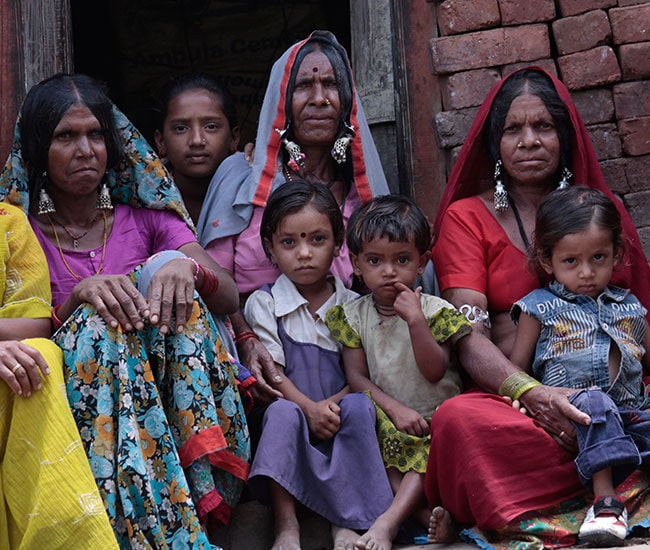
In a society where women dared not move out of the house to participate in public meetings and speak their minds, Maati has succeeded in opening up a new world for them by offering them space to explore their political and creative potential, develop a deeper and wider understanding of issues and given them the confidence to take on leadership roles in the community.
-
 Social Inclusion and Diversity
 -
 Education
 -
 Effective Rehabilitation